
Sep 03.08.d246/w36

Image courtesy http://flickr.com/photos/tanyaryno/975839418/
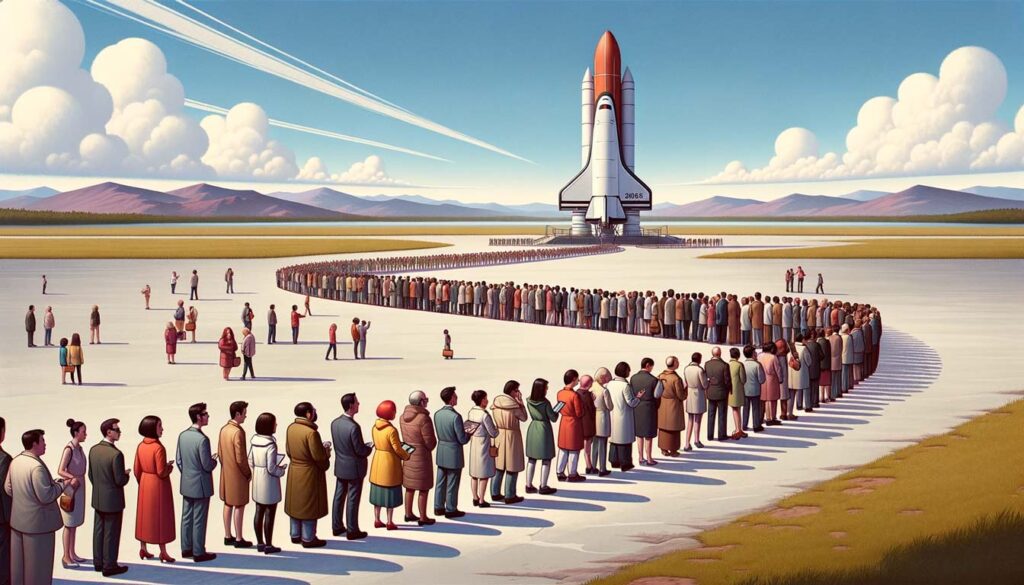
It’s very hard to know just where children’s technology is headed. We’re living in the Digital Age, with new concepts and ideas popping up everywhere — Nintendo Wii, games like Rock Star, etc. It’s hard to know what is here to stay and what’s only a fad. My mother once told me that when she was growing up, television sets were still relatively new. She and her brothers thought they would be ridiculously advanced and the center of everything come the millennium. Yet, 2001 has come and gone, and while the television set is still around, it is certainly not the centerpiece of technology. Its cousin, the computer, has taken that spot. Computers have come a long way, and now some children are introduced to them before they even set foot in school. Much of the new technology that’s being developed involves a computer of some sort. It’s only natural that when people think about the future, computers are usually involved. But what if computers face the same fate as television? What if they are replaced with an entirely new concept? Even if the medium of new technologies for children is not centered on the computer, they should still serve children’s needs while at the same time, not stifling their creativity and competency.
Read the rest of this entry »
Sep 02.08.d245/w36
Greetings from Copenhagen, Denmark! I arrived safely last Wednesday and have spent the past week getting acclimated to my new surroundings! It’s been amazing so far. Aside from this entry, I won’t be posting much about my trip here, but I will do so on the blog I created specifically for the trip: http://michelleabroad.open-orbit.com. You can see more photos (and some videos) at the blog as well.
The school I will be attending took us on a tour of Copenhagen’s canals as part of our orientation, and I unfortunately didn’t bring my camera to take pictures. So I went back the next day on a different boat tour just to take some pictures. Here are just a few of the shots I took:

Copenhagen's famous new harbor

Church

It's just so storybook-like!

The famous Little Mermaid

Opera House -- I think, I should have paid more attention on the tour!

The Black Pearl of Copenhagen

(Not part of the canal tour). Bikes on Strøget, one of Copenhagen's longest pedestrian streets.
Aug 22.08.d234/w34
Note: I wrote this story in 1996. It was inspired by the many ghost house levels in Super Mario World. I’m talking old school Super Mario World for the SNES. The ghost houses always had so many doors and maze-like passages, and I ALWAYS got lost in them!!
My mother told me never to open the door at the end of the looong hallway. But one day I lost my self-control and opened it…and was gobbled up by a huge green monster with claws like chisels and teeth like helicopter blades, never to be seen again on the face of the Earth.
NOT!!!
See, we live in a castle. That’s kind of odd, ’cause it’s just the three of us: Mom, Dad and me. Both of my parents spend their days sitting around in their rooms eating caviar and reading Webster’s College Dictionary. They don’t even come out anymore. So I’ve had to fend for myself practically all my life in this huge castle, cooking my own meals and coming up with ways to entertain myself.

This story was inspired by being lost in Ghost Houses like this. Photo Courtesy of Video Game Critic
There’s this looong hallway in our castle that is quite different from the others. Well, it’s identical to the rest of the halls, with ten brown, wooden doors on either side (sort of looks like two opposing teams facing each other). But one thing the looong hallway has that the others don’t is an extra door at the end of it, and this door looks like it was painted red. THAT’S the door I was talkng about earlier, the one my mother told me never to open. All my life, since I was young I’ve wondered, dreamed and imagined what could be behind that red door. I remember a long time ago when I was 5. My mother (before she and Dad became hermits) caught me in the act of attempting to open the door. “There are hundreds of other doors in this castle. Why do you worry about THAT one so much?” she asked me. So for a while, I just forgot about the door. Until now.
One night, when I was sure my parents were fast asleep, I made my way into the looong hallway, and started walking straight toward the red door. When I reached it, I paused and looked arund. No one approaching. Slowly, I reached my hand out and grasped the knob. I turned it, preparing to scream if I had to…
Read the rest of this entry »
Aug 19.08.d231/w34

Sample Icon
Here are some fun, free Wall-E icons I’ve put together! They are 100 x 100, perfect for LiveJournal and/or as avatars on forums. To use, please right-click and save them to your hard drive. Do not link to them directly from my site. As far as credit goes, it’s not required but I would always appreciate a link or shout out if you so desired! Please click the “Read The Rest of this Entry” link below to view all 24 icons. Thanks, and enjoy!
Read the rest of this entry »
Aug 17.08.d229/w33

My new travel blog!
Just a few announcements to make concerning the state of Open-Orbit.com! First, I’m pleased with the new direction I’ve taken with this site. I enjoy writing posts and it’s fun to brainstorm ideas to fill out each category.
Second, I’ve added a new category called “Resources.” It will contain goodies that I offer for download and/or links to helpful sites and services.
Thirdly, I’ve added a new site to the projects section! It’s called “Michelle in Kobenhaven” and it will serve as the primary blog for my upcoming semester abroad in Copenhagen, Denmark! I hope to post in it several times a week, but that’s only an estimate at this point because I have no idea what my schedule will be like until I’m actually there! While I’m in Denmark, I’ll continue to post entries here, at least once a week, but maybe more. Once again, it depends on my schedule.
In the future I will revamp the Projects section and make it a little more colorful. Also, I’m going to start planning out version 14 of this site. It will be major design overhaul to better reflect Open-Orbit.com’s new mission of exploration, learning and discovery. I’m going to spend many months on the new layout however, so it probably won’t be up until sometime next year! 
Aug 14.08.d226/w33

Kidsongs Sing Out America!
So far, every category on this site has at least one entry — except for “In Retrospect.” As stated on the About page, “In Retrospect” takes a look back at toys, games and other fads from my childhood. I have plenty of ideas for this section, the first being Kidsongs!
If you grew up in the ’80s and early- to mid-’90s, you may remember the Kidsongs videos! I believe there was a television show as well. Each Kidsongs video told a little story around central theme — A Day at Camp, I’d Like To Teach The World To Sing; Cars, Trains and Planes, etc., and the kids in the video would “tell” the story by singing and acting out familiar songs. For example, in the Day at Camp Video, they sang “The More We Get Together” on the bus ride to camp, and “On top of Spaghetti” while they were eating dinner, and so forth. The videos were never overly silly or goofy, and they didn’t look down upon their audience (something I can’t say for a lot of the kids’ stuff coming out today, but maybe I am biased). Plus, each video came with a sing-along card that contained the lyrics for all of the songs featured in the video. The only thing I didn’t like about Kid Songs is that they had a tendency to rewrite lyrics for well-known songs to make them shorter or to fit with the video’s storyline.
Read the rest of this entry »
Aug 12.08.d224/w33
It was around the 3rd millennium BC that prominent changes began to occur in the lifestyles of ancient peoples living in what is now known as the Middle East. This climax of change is commonly called the Neolithic Revolution. The revolution started around 3000 BC and lasted until 1000 BC approximately.
Prior to the third millennium BC, people led a primarily nomadic lifestyle. They hunted and gathered and did not lead a stable life in one location. But around 3000 BC they slowly became more settled. Animals were domesticated and crops were cultivated. Not surprisingly, this development took place quickest in a region known as the Fertile Crescent. The Fertile Crescent (also called Mesopotamia — “between rivers”), is located between the Tigris and Euphrates rivers.
The Tigris and Euphrates regularly flooded after sowing season, so it provided natural irrigation for crops. In fact, irrigation and levees were a big focus of the region in order to maintain potent crops. In Egypt, development occurred in an area known as the Nile Valley. The Nile was very important because it flooded northward into the lands now known as Sudan and Ethiopia every mid-summer. The flood waters eventually hit Egypt.

- Neolithic Revolution, Courtesy of Wikimedia Commons
The Neolithic Revolution brought about new materials in addition to crops. Pottery, weaving and metal working became commonplace. Metals were especially important to production. In 3000 BC, the emergence of Bronze came in handy for making tools and weapons. Iron succeeded Bronze, but it did receive widespread usage until much later. Aside from metals, civilizations also saw specialization in crops, a stronger social hierarchy and even organized communities. These communities grew from quaint villages to larger cities. Cities became centers of activities—commercial, administrative and religious. Speaking of religion, the third millennium BC marked the beginnings of temples with priests.
Aug 08.08.d220/w32

- (c) International Olympic Committee for 2008 Summer Olympics
The opening ceremony for the 2008 Summer Olympics is set to begin today in Beijing. The exact start of the ceremony is 8/8/08 at 8:08:08 p.m. Why all the 8’s? Well, the number 8 is considered lucky in China! Let’s hope that this luck is granted and the ceremonies are successful…as well as bring the world some much-needed peace, even if it’s only for a moment. There were (and still are) some rough spots as far as politics and government goes, but overall, it seems to be coming together quite nicely. I love watching all of the athletes from all over the world march in during the opening parade because it shows that we can put our differences aside for once and celebrate the joys of sport and friendly competition. This year there will be over 10,000 athletes competing competing in 302 events and 28 sports. In 2004, there were 301 events.
During the opening parade, the teams will march in the order of the number of strokes in their country’s name when written in Simplified Chinese. This means Guinea will march second (after Greece, who hosted the previous the summer games and by tradition marches first) and Zambia will march 203rd. China will march last, as is tradition.
As host, China has outdone itself to prepare for the Olympics. They have spent a record-breaking $40.9 billion on venue renovation, construction and expanding Beijing’s subway system.
Now, the designer in me loves graphics and looking at graphics. I thought it would be fun to take a look at logos from previous summer Olympic games. Are you ready?
Read the rest of this entry »
Aug 06.08.d218/w32
Today I’m going to discuss two films that deal with women’s issues in the Muslim world, specifically Iran. The first film, Ten, was directed by Amas Kiarostami (2002). Shot from only two camera angles, this film centers on Mania Akbari, a newly divorced woman who has a job giving people rides in Tehran. Through out the film, Mania has ten separate conversations with her passengers, including her own son. Eventually—through the conversations—the film gives a clear idea of the hardships that come from being female in Iran. The second film, Not Without My Daughter, is a true story, based on Betty Mahmoody’s book of the same name. Directed by Brian Gilbert (1991), the movie also attempts to make a comment on female oppression by showing how Betty Mahmoody, a white American woman, struggled against male authority while visiting her Iranian husband’s family in Tehran with her daughter.

Not Without My Daughter
Actually, I saw Not Without My Daughter before I saw Ten. I saw it quite early in my undergraduate years—before I took a semester-long course about the history of Islam and learned enough about the Islamic community to see just how narrow minded Americans are when it comes to understanding and depicting Muslims. My first reaction after watching Not Without My Daughter was—oh my God, I’m so glad that I live in America. After all, I could never live in such a place like Iran, where husbands beat their wives at will; where women do not have custody over their children—even if these children aren’t Iranian citizens—instead, custody belongs to husbands entirely. No, I could not live in Iran, where sure, I as an American woman could leave the country whenever I wish, but my child could not unless my husband gave his permission. I could not live in Iran, where I must dress like all the other Iranian women by covering my face completely. Oh and I must make sure to watch that veil—if it falls a tiny fraction of an inch, I could get arrested. I could not live in Iran, the country in which the only way to escape the country—with my child—as a woman is by a long journey marked by me hiding my identity and doing everything I can to outsmart the guards at the checkpoints. It is only when I see the American flag at the end of this journey that I can sigh with relief. Ah, I am in America. I am home baby. I am home.

Ten
That’s the basic message that I got after watching Not Without My Daughter. Those are the things that happened to Betty Mahmoody during her visit to Iran, and while it is clear that the filmmaker wanted to use her struggles to show what life is like for women in Iran, it is also clear that the filmmaker chose to depict the streets and culture of Iran as so hostile and primitive that nobody could possibly want to live there.
Ten, in contrast, takes viewers directly to those streets and gives the voices of the diverse group of people who walk them a chance to be heard. After watching Ten, I felt enlightened. I realized that Iran is not the bad place it is often made out to be, despite its history of oppression against women. For one thing, neither Mania nor most of the women she picked up had their veils completely covering their faces. Secondly, Ten gives us hope that one day women will be able to break out of their oppression. Even though Mania had to prove that her husband was a drug addict in order to divorce him, the fact that she was able to get a divorce in order to free herself and live her own life signifies shows that women do have some rights.
In all, Not Without my Daughter is a film to assure Americans that there is no better place for women to live than in the land of free and the home of the brave. Ten tells it like it is and, as aforementioned, does not let go of the hope for women in Iran.
Aug 05.08.d217/w32
I received this as an email forward from a friend of mine. I am not the original author of what you are about to read. You may have received this in your email at some point as well, or came across it on the internets. Enjoy!
1. How do you put a giraffe into a refrigerator?
Stop and think about it and decide on your answer before you scroll down.

Courtesy of DailyClipart.net
Read the rest of this entry »